
Respite that feels like a real break, for everyone
Respite is not just time off. It is a chance to breathe, reset, and feel steadier again. We offer 1:1 funding ratio support only that’s shaped around the person, their routines, and what helps them feel safe and understood. Whether respite happens at home or out in the community, we plan it with care and keep it flexible.
What respite can look like
One-on-one respite can be calm and familiar, active and social, or a mix of both. Some people want continuity at home. Others want support to get out, do something meaningful, or reconnect with community. Respite can be a full day, or a planned short break, depending on what’s needed. What matters most is that it feels respectful, predictable where it helps, and flexible where it’s needed.
If you’re not sure where to start, tell us what’s been hardest lately.
1:1 Support
Support that stays steady, responsive, and paced around the person.
Planned with you
We learn what helps, what doesn’t, and what a “good day” looks like.
Flexible by design
Quiet time counts. So does community time. We follow the person’s lead.
How respite is planned
Good respite starts before the first shift
01
We listen first
We learn what matters, what helps, and what gets in the way. That includes routines, communication, sensory needs, health and safety considerations, and what a “good day” looks like.
02
We plan with you, not for you
Together we create a simple, practical plan that supports comfort, choice, and continuity. It might include preferred routines, meal support, transport preferences, and strategies that help someone regulate when things feel too much.
03
We check in and adjust
Respite should reduce stress, not add to it. We reflect on what worked, what didn’t, and what needs changing. The plan can grow slowly, at a pace that feels safe.
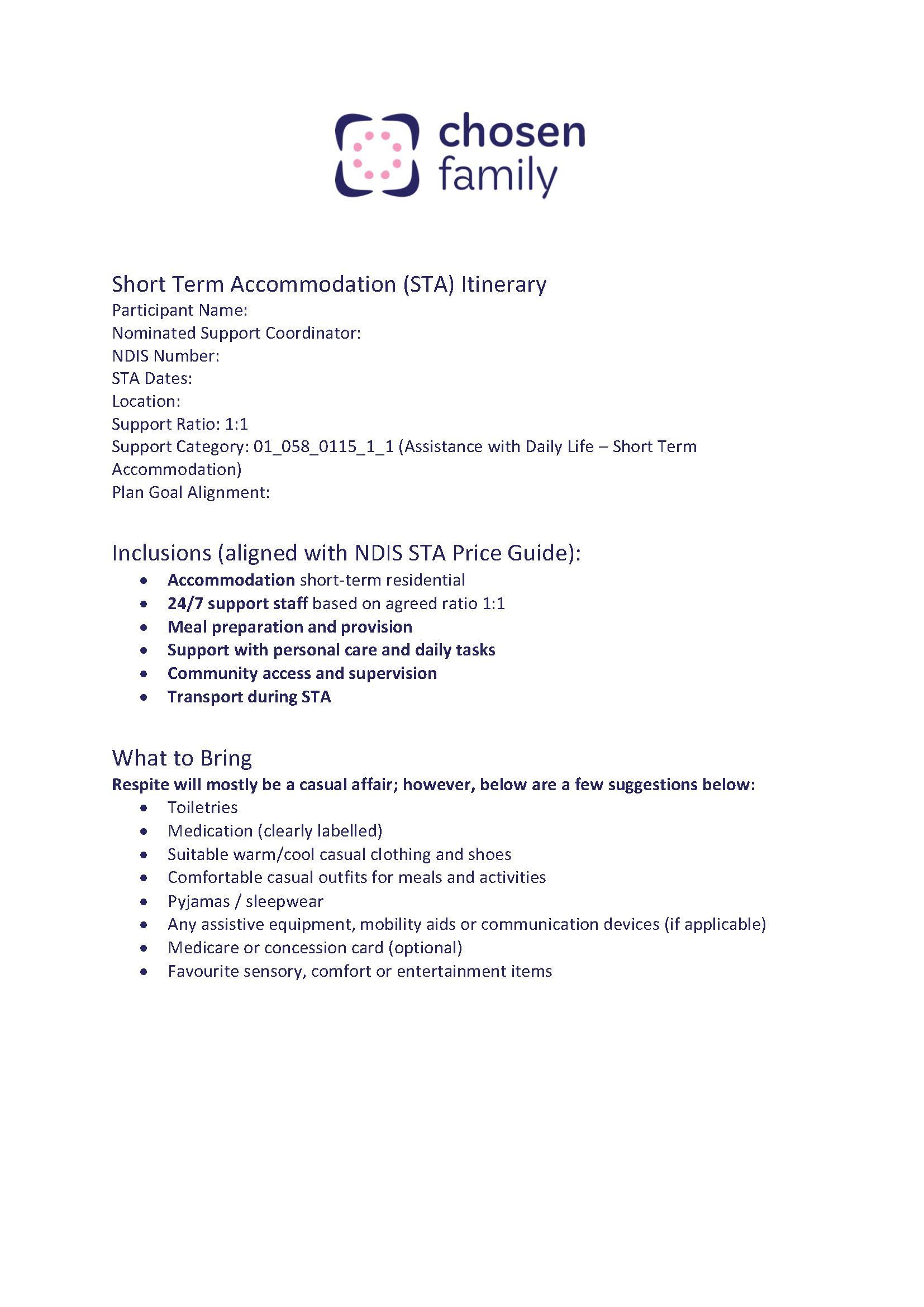
Example itinerary module
A three-day respite itinerary (1:1 support)
Every itinerary is personalised. This example shows the kind of structure and care we aim for, with flexibility built in. It is designed to support comfort, regulation, and meaningful time, while keeping transitions clear and pressure low.
FAQs
What is Short Term Respite (formerly Short Term Accommodation or STA)?
Short Term Respite is NDIS-funded support that gives a person time away from their usual care arrangements, while their primary informal supports take a short break.
How many days of Short Term Respite can you use each year?
The NDIA generally funds up to 28 days per year, usually with a limit of up to 14 days at a time (eligibility and plan funding can vary).
What does Short Term Respite funding typically cover?
NDIA guidance describes this support as a package and may include agreed supports and activities during the stay, depending on the arrangement and what’s considered reasonable and necessary in the plan.
Can Short Term Respite be used flexibly (for example, weekends or blocks)?
Yes. NDIA guidance notes it can often be used flexibly, such as a block of days (up to the usual limit) or smaller, regular breaks, as long as it aligns with the plan and funding.
What’s the difference between Short Term Respite and Medium Term Accommodation (MTA) or SIL?
Short Term Respite is intended for short breaks (generally within the 28-day annual guideline), while other home and living supports may apply for longer-term accommodation needs.

We got it.
Thank you for contacting us.We’ll get back to you as soon as possible.
Ready to Speak to Us?
Registration Number
405 014 6042
ACN
660 703 122
ABN
40 660 703 122
Contact Details
Call Us
(02) 4713 1801
Text Us
0482 077 797
Email Us
info@chosen.family